Posts

Showing posts with the label Bridge Theory

When the bridge comes into operation

If you accept the idea of the existence of the bridge, you change the very way you look at interactions. We no longer start from forces, fields, constants, we start from a mediated exchange that takes place through a temporary configuration. The bridge does not explain what interacts, it explains how the interaction takes place. The exchange does not occurs instantaneously, it is structured in time In the standard physical framework, the interaction is often represented graphically as a summit a punctual event, an immediate passage, but if there is a bridge the exchange occupies space, has a physical duration, the energy does not pass "at once", it is temporarily organised in the mediation structure. This means a simple but powerful thing: the interaction has an internal dynamic duration, even if it is not always directly observable. Balance becomes the central principle D uring the exchange, what is emitted, what is absorbed and what remains "temporarily" in the br...

The idea of the bridge

One thing is clear: if physics is made of events and exchanges, then something is needed that makes the exchange possible. It is not enough to say that two entities interact, we must ask ourselves how entities enter into relation and this is where the idea of a bridge is born. Why "Bridge" The term Bridge is not a literary metaphor, but a precise conceptual choice. A bridge is not a source, an autonomous object, a new fundamental entity. A bridge is what connects two systems, which allows a passage, which exists only as long as the passage takes place. Applied to physics, this means a simple but radical thing: the bridge is not an addition to the system but the physical condition of the exchange. Mediating is not to sum In the standard way of telling physics the interactions add up, each force contributes with its own term, the result is a combination of independent effects. The idea of the bridge changes perspective.    Mediating means that the exchange takes place through ...

The problem at the origins of physics

There is a curious fact in modern physics: we know how to calculate almost everything, but we understand less and less what we are describing. Theories work, often in extraordinary ways. Forecasts coincide with experiments with measurements at an impressive number of figures. Yet, if we ask what is really happening, the answer becomes vague, fragmented, sometimes circular. Interactions without a mechanism In the standard story: particles interact because there are fundamental interactions, interactions exist because they are described by fields, fields exist because they work mathematically. But what happens physically during an interaction? What does it mean, in concrete terms, that two entities “exchange” something during interaction? Energy? Quantity of motion? Information? Above all: why does that exchange have that value and not another? Here the first problem emerges: the physical mechanism is replaced by formalisation. Constants that don't tell a story Mating constants are a...

The State of Physics in the 900 '

Image
       At the beginning of the twentieth century, physics was in full swing. After the invention of the spectroscope made by Fraunhofer (1814) and the discovery of absorption lines, dark lines, visible both in the spectra of sunlight and stellar light and in the light reflected from the surface of the Moon and some other brighter planets, the studies by the Kirchhoffs and Bunsen quickly led to the discovery and study of emission lines in the light spectra of chemicals (Fig. 1).   Fig. 1   The correspondence of some of the visible emission lines with the absorption ones, as in the case of the fundamental H-alpha line of hydrogen (red line in Fig. 5), has led to a qualitative leap in the study of the cosmos, opening the way to analyze the composition of stellar atmospheres: it was now clear that nature, so jealous in keeping the secrets of matter, could hide them for a while longer. The discovery and study of natural radioactivity (1896) by H....

The Quantum Border

Image
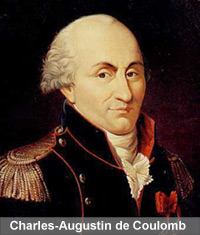
In classical electromagnetic theory, the one developed in the period from 600 to 800 by scientists such as Coulomb, Volta, up to Maxwell, a pair of charges of opposite sign forms a dipole,  the most basic system of charges in interaction, the simplest of electromagnetic sources.  The study of the dipole can be addressed at various levels of complexity. Usually a pair of charges placed at a certain distance of interaction is taken into account without the problem of the actual dynamic conditions: energy, momentum and trajectories of interacting particles.   To analyze the electromagnetic emission of a dipole source, we consider as fundamental variables of the physical model the spatial extension of the source, determined by the distance of interaction and the distance of an observer ( physical   observation and measurement system)  reputed placed in the center of the source. Moving away from the center of the source and examining the structur...

Introduction to a New Vison of the World

Science often finds it difficult to renew itself conceptually as there is a kind of inertia in abandoning old proven paths to new roads still unknown. New ideas are sometimes not well received not because they are sterile or useless, but because they are alien to the current of dominant thought of the time. In the history of physics few have been the ideas that have introduced novelty in scientific thought. Discoveries of the past such as those due to Kepler, Galileo, Newton, Einstein and others, although they have contributed decisively to scientific and philosophical progress, have not always turned out to be absolute truths, but rather exceptional contributions to the understanding of the world, of the pieces of a puzzle that we are still far from having completed. This Blog tells the story of a discovery that involved and passionate me and other colleagues who shared with me years of work and passion towards an idea that despite not having introduced new truths and not belonging ...